A toilet shelving unit is a storage system placed above or around a toilet. It uses unused wall or floor space to hold toilet paper, towels, toiletries, and bathroom supplies. The best option fits your bathroom measurements, allows easy toilet access, and uses materials that can handle bathroom moisture.
In American homes, bathrooms come in many sizes. A small apartment bathroom may have little room for a storage cabinet, while a guest bathroom may lack enough shelves for extra towels and daily supplies. Using the empty space above the toilet can solve this common storage problem without taking up much additional floor space.
A toilet shelving unit can add useful storage while keeping the room neat. Some designs stand on the floor around the toilet. Others attach to the wall or use enclosed cabinets. Your choice should depend on the toilet layout, available wall space, moisture levels, storage needs, and whether you can make permanent changes to the bathroom.
The right unit should do more than look good. It should remain stable, leave enough room to use and maintain the toilet, and keep stored items easy to reach. Careful measuring before buying can help prevent problems with low shelves, blocked plumbing, and poor fit.
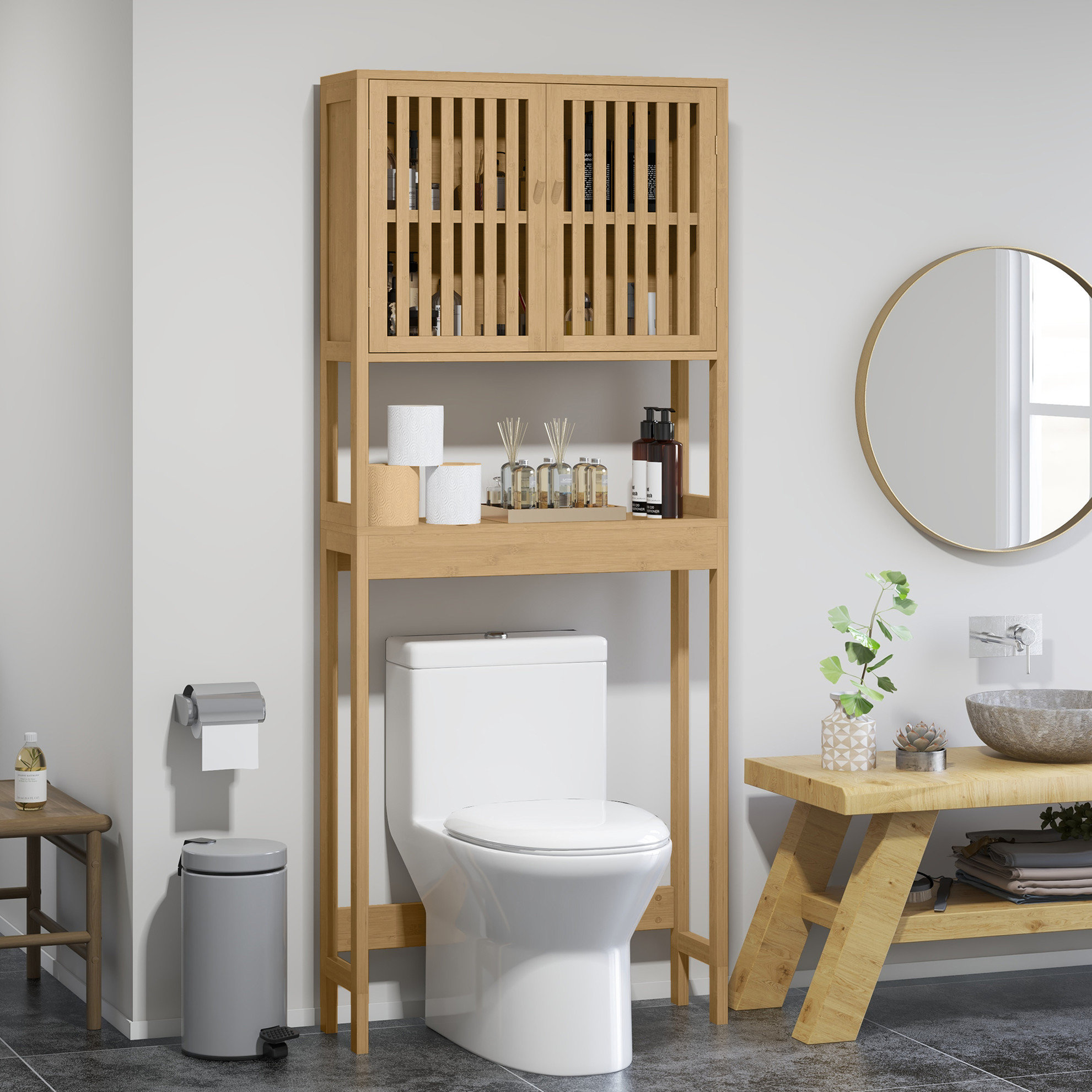
A toilet shelving unit is a bathroom storage fixture designed to fit above, behind, or around a toilet. It makes use of space that often stays empty in small bathrooms. Most units provide two or more shelves for everyday items, spare toilet paper, towels, and personal care products.
Many people also call this fixture an over-the-toilet storage rack, bathroom toilet shelf, or over-the-toilet organizer. These names usually describe similar products, although the design and installation method can vary.
A basic unit may have an open metal frame with three shelves. A larger model may include cabinet doors, drawers, side hooks, or a toilet paper holder. Some designs stand on the floor, while others attach directly to the bathroom wall.
The main purpose is to add storage without placing another cabinet beside the vanity or taking up valuable walking space. This makes the unit useful in apartments, guest bathrooms, half baths, and other rooms with limited storage.
Source: m.media-amazon.com
Everyday storage
Keep toilet paper, hand towels, soap, and other bathroom supplies in one easy-to-reach place.
Better use of vertical space
Use the empty wall area above the toilet instead of filling the floor with extra furniture.
A more organized bathroom
Give bathroom items a fixed place and reduce clutter around the sink and vanity.
Flexible design choices
Choose from open racks, wall shelves, enclosed cabinets, and freestanding storage frames.
How Does It Differ From a Regular Bathroom Shelf?
A regular bathroom shelf can go on almost any suitable wall. A toilet shelving unit is designed for the space around a toilet. Its height, width, frame, and shelf position must allow the toilet to remain usable.
Many over-the-toilet designs also have two side supports that stand on the floor beside the toilet. This creates a frame around the fixture and allows storage without using the wall as the main support.
Who Can Benefit From One?
Homeowners who need more bathroom storage can use these units to organize daily supplies. Renters may prefer freestanding models that do not require permanent holes in the wall.
They can also help families organize shared bathrooms. However, families with young children should pay close attention to stability, wall anchoring, and the placement of small or heavy items.
Types of Toilet Shelving Units to Consider
Toilet shelving units come in several styles. The best type depends on your available space, storage needs, wall condition, and preferred appearance. Compare the installation method first because it affects both stability and the amount of room the unit uses.
Some designs provide open access to every shelf. Others hide supplies behind doors. A few combine open shelves with closed storage, giving you space for both useful items and simple decorations.
Source: m.media-amazon.com
Freestanding over-the-toilet rack
This unit has a frame with legs that stand on the floor on both sides of the toilet. It is useful when you want storage without installing a full wall cabinet. Check the frame width, floor clearance, and stability before buying.
Wall-mounted toilet shelving
These shelves attach to the wall above the toilet. They leave the floor clear and can create a simple, modern look. The wall and mounting hardware must support the intended load.
Over-the-toilet cabinet
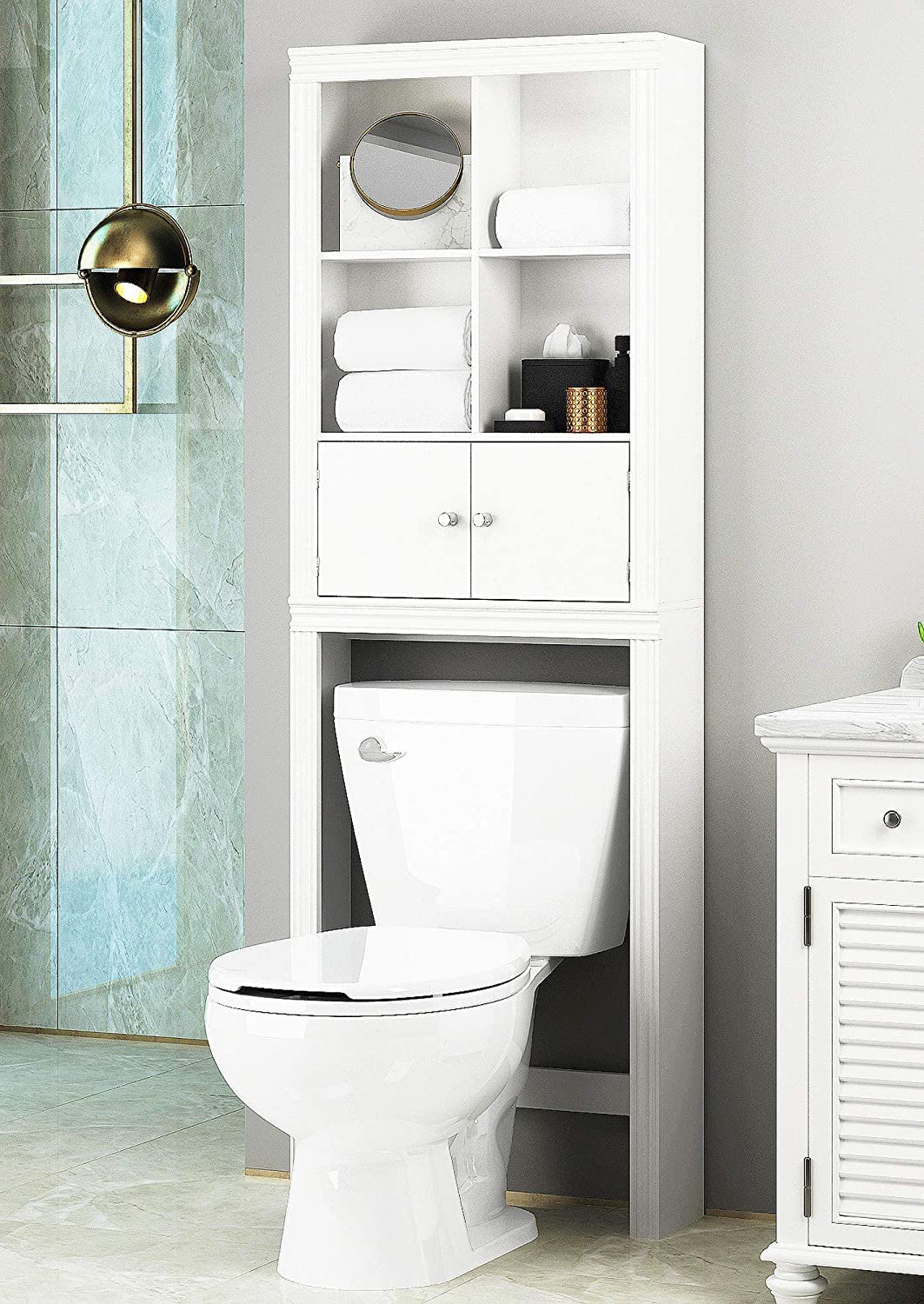
A cabinet has doors that hide bathroom supplies. It can help keep personal products and spare items out of sight. Check door swing and tank access before installation.
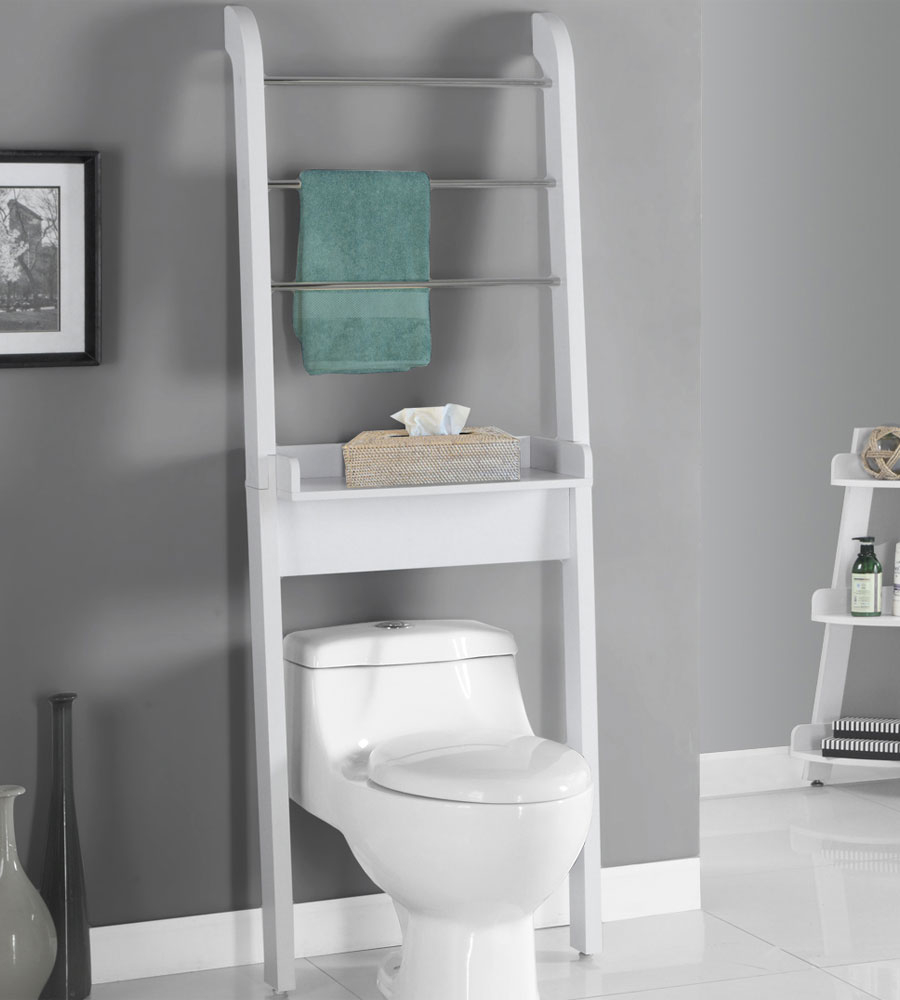
Ladder-style shelving
This design usually leans against the wall and has shelves that become narrower toward the top. It offers a decorative look, but it needs a stable base and suitable wall support.
Adjustable shelving rack
Adjustable shelves let you change the space between levels. This helps when you need to store tall bottles, folded towels, or different-sized baskets.
Corner toilet shelving
A corner design can work when the toilet sits close to a side wall. It uses an otherwise difficult area, although the available shelf space may be smaller.
Open Shelves or Closed Cabinets?
Open shelves make it easy to see and reach stored items. They work well for neatly folded towels, decorative baskets, and supplies you use often. The drawback is that everything remains visible and may collect dust.
Closed cabinets provide a more private storage area. They are useful for extra toiletries, cleaning accessories, and products you do not want on display. However, the doors need enough room to open without hitting a wall, toilet, or nearby fixture.
A mixed design can offer a practical balance. Use closed storage for everyday supplies and open shelves for a few neat items. This keeps the bathroom useful without making the space look crowded.
Freestanding or Wall-Mounted: Which Is Better?
A freestanding rack is often easier to move or remove. It may suit renters and bathrooms where drilling is not allowed. Still, it needs a level floor and a design that does not shift when someone uses the toilet or cleans nearby.
A wall-mounted shelf can create a cleaner appearance and keep the floor open. It is often a good option for a permanent home installation. The main concern is choosing suitable wall anchors and installing the fixture correctly.
How to Choose the Right Toilet Shelving Unit
Choosing the right unit starts with measurements, not appearance. A shelf may look suitable online but still block the toilet tank, feel too deep, or leave too little room for cleaning. Measure the actual bathroom space before comparing styles and finishes.
Think about what you plan to store. A household that needs extra toilet paper and towels may need a different design from a guest bathroom that only needs a few small items. Buying for your real storage needs can prevent wasted space and unnecessary expense.
Source: thespruce.com
1. Measure the Toilet and Available Space
Measure the width of the toilet at its widest point, including any parts that may come close to the shelving frame. Then measure the height from the floor to the top of the toilet tank. These measurements help you determine whether a freestanding unit will fit around the fixture.
Next, measure the distance from the back of the toilet to the wall and check the available depth. Look at nearby walls, doors, vanities, towel bars, and plumbing pipes. A unit should not block movement or make the bathroom difficult to clean.
Also check the height of the ceiling and the space above the tank. You need room to remove the tank lid if your toilet has a standard exposed tank. Follow the toilet manufacturer’s maintenance requirements rather than relying on a fixed clearance that may not suit every model.
Toilet width
Check the distance between the sides of the toilet and the frame supports.
Overall height
Make sure the top shelf does not interfere with ceiling fixtures or nearby storage.
Shelf depth
Avoid a design that projects too far over the toilet or creates a head clearance problem.
Tank access
Allow enough space to lift the tank lid and reach the flush mechanism.
Floor space
Check that the legs do not block the toilet base or make cleaning difficult.
2. Check the Material and Finish
Bathroom storage faces humidity, steam, water drops, and frequent cleaning. Material choice can affect how long a unit stays in good condition. Look for a finish and construction that match the moisture levels in your bathroom.
Metal racks with suitable protective coatings can be practical for bathrooms. Stainless steel may resist corrosion, but the exact grade, finish, welds, and hardware still matter. A product described as stainless steel should not automatically be treated as rust-proof in every environment.
Wood can give the bathroom a warm and natural look. Solid wood and properly sealed engineered wood are different from untreated particleboard. Check whether the manufacturer allows use in humid rooms and whether exposed edges have protective finishing.
Plastic shelves are often light and easy to wipe. They may work well for basic storage, although strength and long-term appearance depend on the material and design. Check the stated weight limit before placing heavy bottles or large containers on them.
Stainless steel
A useful option for a clean, simple appearance. Verify the material grade and corrosion protection.
Powder-coated metal
Offers a finished surface and can work well when the coating remains intact.
Solid wood
Adds natural warmth but needs a suitable protective finish and regular care.
Engineered wood
Can provide an affordable cabinet-style appearance. Check its moisture protection and edge sealing.
Plastic
Often easy to clean and lightweight. Compare its strength, shelf support, and surface quality.
3. Review the Weight Capacity
Every shelving unit has a stated weight limit. Some manufacturers list a maximum load for each shelf, while others provide a total capacity for the complete unit. Read the instructions carefully because these figures are not interchangeable.
Full shampoo bottles, cleaning products, and large tissue packs can add weight quickly. A shelf that holds several small towels may not be suitable for heavy glass containers. Distribute the load as directed and avoid placing all the heavy items on the highest level.
The wall and mounting hardware also affect the safe load of a wall-mounted design. A strong shelf attached with unsuitable anchors may still fail. Do not assume that a product’s advertised capacity applies to every wall type.
4. Match the Design to Your Bathroom
Choose a finish that works with the existing bathroom fixtures. White shelving can blend with many traditional bathrooms, while black metal may suit a modern design. Natural wood tones can add contrast to white tile and neutral walls.
The goal is to make storage look like part of the room. A large dark unit may feel heavy in a narrow bathroom, while a slim frame can help the space feel more open. Keep the number of visible items low to avoid a cluttered appearance.
How to Install a Toilet Shelving Unit
Correct installation helps a toilet shelving unit remain stable and usable. The exact process depends on the model. A freestanding rack may only need assembly, while a wall-mounted cabinet requires suitable anchors and careful positioning.
Before starting, read the manufacturer’s instructions and check all parts. Do not skip a wall attachment just because the unit appears stable while empty. Tall storage can shift or tip when someone bumps it or pulls an item from a shelf.
Source: assets.wfcdn.com
Tools and Supplies You May Need
Most basic assemblies need a screwdriver, measuring tape, and level. Some wall-mounted designs also require a drill, suitable drill bits, wall anchors, and a pencil for marking positions. The exact tools depend on the wall material and the hardware supplied with the unit.
If the fixture is large or awkward to hold, ask another adult to help during assembly. This can reduce the chance of dropping the frame or damaging the toilet and surrounding tile.
Measuring tape
Use it to confirm the frame position and available clearance.
Level
Check that shelves and frames sit evenly.
Screwdriver
Tighten the supplied fasteners according to the instructions.
Suitable drill and anchors
Use these only when required by the installation instructions and wall type.
Cleaning cloth
Remove dust and debris after the installation is complete.
Steps for Installing a Freestanding Rack
First, clear the area around the toilet. Check the parts list and inspect the frame, shelves, screws, and feet for damage. Do not assemble a unit with bent supports or missing structural parts.
Second, connect the frame sections using the supplied fasteners. Tighten each connection as directed. If the design includes a crossbar, install it in the correct position because it may help reduce side-to-side movement.
Third, attach the shelves and accessories. Confirm that adjustable shelves are locked in place and that hooks or holders cannot slide off. Install any supplied floor pads or protective feet.
Fourth, move the rack into position. Check that both sides stand on a level surface and that no support presses against the toilet. If the manufacturer requires wall anchoring, complete that step before using the unit.
Finally, check every joint and shelf. Apply gentle pressure to confirm that the rack does not wobble. Do not use it if the frame shifts, tilts, or makes contact with the toilet during normal movement.
Steps for Installing Wall-Mounted Shelves
Start by checking the wall. Find out whether it is drywall, wood, masonry, or tile over another surface. The correct anchor depends on the material and the expected load. When possible, attach structural brackets to suitable wall framing.
Mark the shelf position with a pencil and level. Before drilling, check for hidden plumbing pipes and electrical wiring. Do not drill blindly into a wall above or behind a toilet because supply lines and other services may run through the area.
Use a drill bit designed for the surface. Tiled walls need the correct tile bit and a careful drilling method to reduce the risk of cracking. If you are unsure about the wall structure or hidden services, get help from a qualified installer.
Install the brackets and fasteners according to the manufacturer’s instructions. Place the shelf on the supports and check that all connections are secure. Test it carefully before adding bathroom products.
How to Know the Installation Is Successful
A properly installed unit should sit level and remain stable during normal use. It should not lean against the toilet, block the tank lid, or prevent access to nearby plumbing. The shelves should remain in their intended positions when you place normal items on them.
Check the unit again after the first few days of use. Look for loose screws, shifting feet, damaged wall anchors, or signs of moisture. Stop using the unit if you notice movement or structural damage.
Practical Ways to Organize a Toilet Shelving Unit
A shelving unit works best when every shelf has a clear purpose. Instead of filling every level with random products, group similar items together. This makes it easier to find supplies and helps the bathroom stay neat.
Think about how often you use each item. Daily products should stay within easy reach, while backup supplies can go higher. Heavy containers should remain on lower shelves, subject to the product’s instructions and load limits.
Source: visualhunt.com
Use the Top Shelf for Backup Supplies
The highest shelf is useful for items you do not need every day. Store extra soap, unopened toiletries, replacement tissue packs, and other lightweight supplies there. Use a secure basket to keep small products together.
Avoid placing heavy glass bottles or large containers overhead. A high shelf is harder to reach and can create a risk if an item falls. Keep anything used often at a lower and more convenient level.
Keep the Middle Shelf for Daily Items
The middle shelf is often the easiest area to reach. It can hold hand towels, tissue rolls, personal care items, and a small basket for frequently used supplies. Keep the number of products limited so you can see what you have.
Small containers can prevent loose items from spreading across the shelf. Use separate baskets for different categories rather than mixing toiletries, cleaning accessories, and paper products together.
Use the Bottom Shelf Carefully
The lowest shelf should not interfere with sitting, standing, or accessing the toilet tank. If it is close to the toilet, avoid storing large objects that may create a head clearance problem. Follow the product’s design and the space available in your bathroom.
This shelf can hold lightweight towels or a small basket when there is enough clearance. Keep the floor area around the toilet easy to clean and avoid placing absorbent items where they may get splashed.
Add Baskets and Small Organizers
Baskets help create order on open shelves. They can hold cotton pads, small toiletries, spare soap, and other loose items. Choose washable containers or materials that suit the humidity in the room.
Labeled baskets can also help families share storage. For example, one container can hold guest supplies, while another stores spare hand towels. This simple system makes it easier to return items to the right place.
Keep the Decor Simple
A toilet shelving unit can also support a few decorative items. A small artificial plant, a neat soap container, or a simple framed print can make the area feel more finished. Avoid adding objects that reduce useful storage or make the shelves difficult to clean.
Do not place candles, electrical devices, or fragile decorations where they can fall into the toilet or onto someone. Practical storage should remain the main purpose of the unit.
Toilet Shelving Unit Ideas for Small Bathrooms
A small bathroom needs storage that makes good use of vertical space without making the room feel crowded. A narrow shelving unit can provide room for supplies while leaving the floor open. The best design depends on the location of the toilet, vanity, shower, and door.
Before choosing a style, consider the room as a whole. A unit that fits above the toilet may still block a cabinet door or make it hard to move through the bathroom. Choose a design that improves storage without creating a new problem.
Source: storables.com
Choose a Slim Storage Rack
A slim rack can work well in a half bath or narrow apartment bathroom. It provides several storage levels without extending too far into the room. Check the shelf depth and your seated head clearance before buying.
Use the rack for small towels, tissue rolls, and a few basic supplies. Avoid filling it with oversized containers that make the bathroom feel crowded.
Use Vertical Wall Shelves
Wall shelves can use the height above a toilet without taking up floor space. A vertical arrangement of two or three shelves can provide useful storage while keeping the floor easy to clean.
Make sure the shelves are attached to a suitable wall. Leave enough space between levels for the items you plan to store and make sure the lowest shelf does not interfere with normal toilet use.
Try a Compact Cabinet
A narrow cabinet can hide extra toilet paper, personal care products, and cleaning accessories. This is useful when open shelving makes a small room look busy. Choose a model with doors that can open fully without hitting nearby fixtures.
A light-colored finish may help the unit blend into a small bathroom. However, appearance should come after fit, stability, and access to plumbing.
Use Adjustable Shelves
Adjustable shelves make it easier to organize items of different heights. You can create a larger space for folded towels or a smaller section for tissue rolls and toiletries. This flexibility can be useful when your storage needs change.
Check how the shelves lock into position. A shelf that rests loosely on small supports may move when items are removed or replaced.
Use Matching Storage Containers
Matching baskets and containers can make an open shelf look more organized. They also help hide product packaging and loose items. Choose containers that fit the shelf and can be removed easily for cleaning.
Avoid placing damp towels in closed baskets for long periods. Allow wet items to dry properly before storing them to reduce moisture buildup and unpleasant odors.
Frequently Asked Questions
Q
What Is the Best Type of Toilet Shelving Unit?
The best type depends on your bathroom layout and storage needs. A freestanding rack can suit renters and people who want movable storage. A wall-mounted shelf works well when you want to keep the floor clear. An enclosed cabinet is useful when you prefer to hide bathroom supplies.
Q
Can You Put a Shelf Directly Above a Toilet?
Yes, a shelf can be installed above a toilet when the wall, mounting hardware, and shelf design are suitable. It must leave enough room for normal toilet use and tank maintenance. Secure the shelf according to the manufacturer’s instructions and avoid placing heavy or fragile objects where they could fall.
Q
How High Should a Toilet Shelving Unit Be?
There is no single height that works for every toilet and bathroom. Measure from the floor and tank lid, then check how much room is needed to remove the lid and reach plumbing parts. Also consider seated head clearance and access to the flush controls. Follow the toilet and shelving manufacturers’ instructions.
Q
Are Freestanding Over-the-Toilet Shelves Safe?
They can be suitable when the frame is correctly assembled, placed on a level floor, and used within its stated weight limits. Some models also require wall anchoring. Follow the supplied safety instructions, keep heavy objects low, and prevent children from climbing on the unit.
Q
What Should You Store on a Toilet Shelving Unit?
You can store spare toilet paper, clean hand towels, soap, toiletries, small baskets, and lightweight bathroom accessories. Keep products in suitable containers and protect paper goods from moisture. Store heavy items on lower shelves and keep cleaning chemicals out of children’s reach.
Q
Can a Toilet Shelving Unit Work in a Rental Bathroom?
Yes. A freestanding over-the-toilet rack can provide storage without permanent wall changes. Check whether the frame fits around the toilet and whether its feet remain stable on the floor. Ask your landlord before drilling or attaching hardware to the wall.
Q
Which Material Is Best for Bathroom Shelving?
There is no single best material for every bathroom. Coated metal, suitable stainless steel, sealed wood, and quality plastic can all work in the right conditions. Compare moisture protection, construction, load capacity, and cleaning needs before choosing.
Q
How Do You Keep an Over-the-Toilet Shelf Clean?
Remove stored items and wipe the shelves with a cleaner approved for the material. Dry the surface before returning paper products and other moisture-sensitive items. Check corners, joints, and metal connections for dirt, corrosion, or signs of damage.
✦ Wrapping Up
Conclusion
A toilet shelving unit can make a bathroom more useful by turning unused space above the toilet into practical storage. It can hold extra toilet paper, towels, toiletries, and other daily supplies without requiring a large cabinet or taking up much floor space.
The right choice depends on your room measurements, storage needs, preferred design, and installation options. Freestanding racks offer flexibility, wall-mounted shelves keep the floor open, and enclosed cabinets help hide clutter. Material quality and moisture protection also matter when choosing a unit for regular bathroom use.
Good installation and careful organization help the shelving remain useful over time. Keep the unit stable, respect its weight limits, protect it from excess moisture, and leave enough space for toilet use and plumbing maintenance. A well-planned setup can make even a small American bathroom feel more organized and comfortable.
💡 Key Takeaway
Before buying a toilet shelving unit, measure your toilet and available wall space, check the tank lid and plumbing access, compare material and weight limits, and choose a stable design that suits your bathroom. Install it according to the manufacturer’s instructions and organize supplies by how often you use them.